
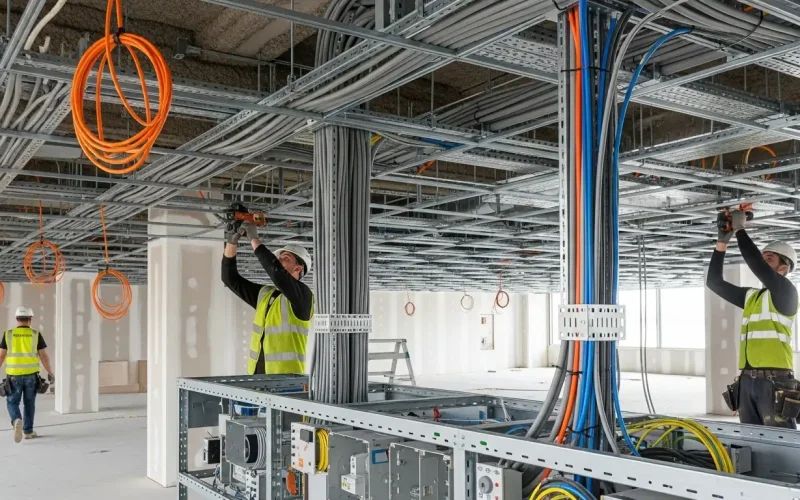
When you’re planning a commercial fitout, it’s easy to focus on the visual details: flooring, colours, furniture. But behind the walls, the electrical setup is doing all the heavy lifting. A well-planned electrical fitout doesn’t just keep the lights on. It powers your equipment, supports your team, and keeps your business running safely and efficiently.
Whether you’re opening a new café, redesigning your office, or upgrading a retail space, getting the electrical side right is just as important as the look and feel of the space. With the right planning, support, and execution, your electrical commercial fitouts guide becomes the foundation for a smooth launch and long-term success.
Let’s walk through the key things to get right, and how to avoid common issues during your commercial fitout.
Planning Starts with Purpose
Before any wires are installed, you need a clear understanding of how the space will function. A tailored electrical commercial fitouts guide starts with asking the right questions: What type of work is being done in each area? How many people will be using the space? What kind of equipment will need power?
From lighting and data cabling to power outlets and security systems, your layout should support current needs while allowing for growth. A licensed commercial electrician can help you plan with both compliance and flexibility in mind.
Engage the Right Professionals Early
Your electrical contractor shouldn’t be a last-minute hire. Involving a trusted local electrician in Melbourne at the beginning of your fitout gives you access to expert insights, accurate cost estimates, and potential design improvements. Early collaboration also reduces the risk of costly changes or delays later in the project.
A skilled team will coordinate with other trades, handle permits, and ensure that your build meets Australian standards. Everything from switchboards to emergency lighting is up to code.
Prioritise Safety and Compliance
No matter the size of your fitout, safety must be a non-negotiable priority. That includes fire safety systems, compliant cable management, exit and emergency lighting, safety switches, and circuit protection.
Regular maintenance is just as important once the fitout is complete. Be sure to schedule electrical inspections at appropriate intervals to identify hazards and keep everything running smoothly.
If you’re operating in an industrial or high-load environment, be sure to speak with specialists in industrial electrician services who understand the unique requirements of your space.
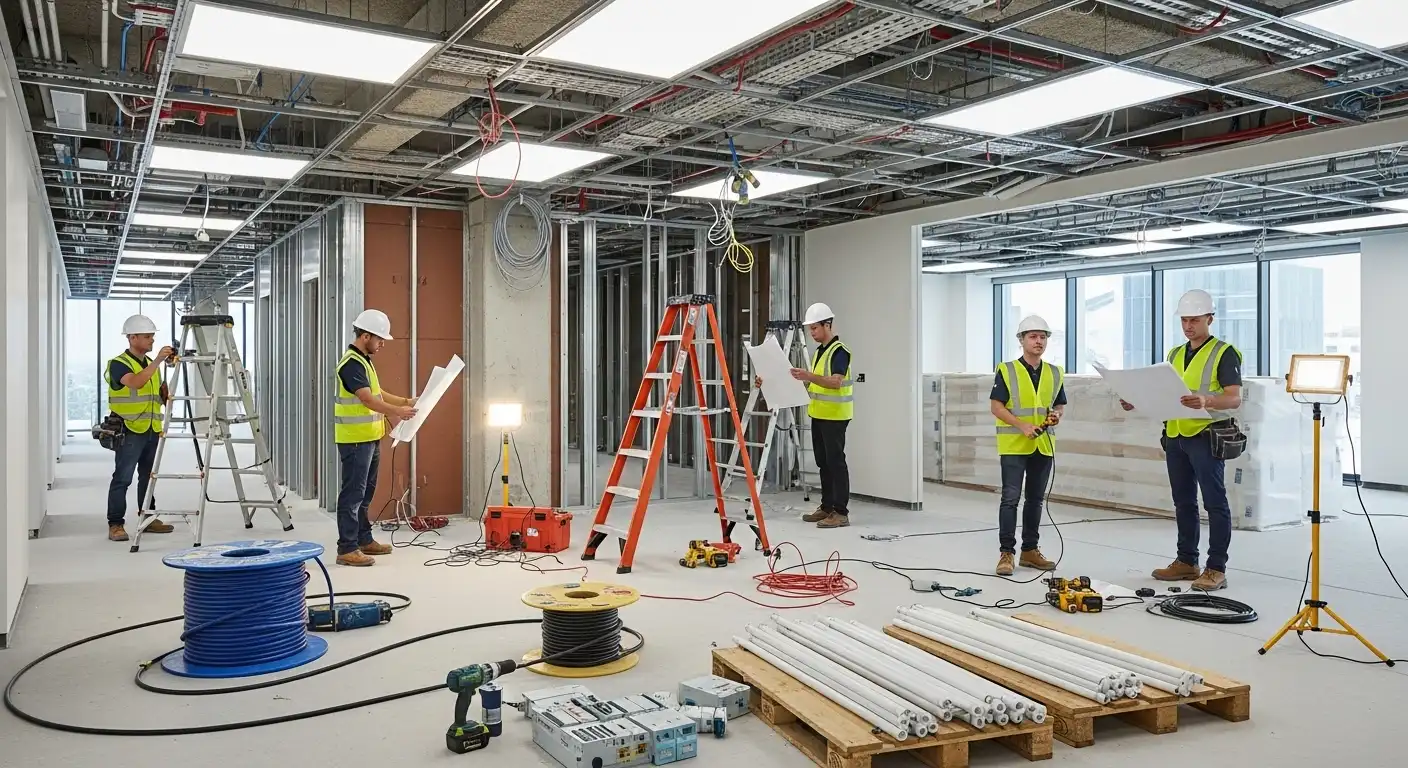
Plan for Power, Lighting, and Efficiency
Modern workplaces rely on more power than ever before. That’s why your electrical fitout should take energy use, lighting levels, and load demands into account. Plan the number and placement of outlets to suit your workflow, avoiding clutter and extension cords later on.
Choose lighting that supports productivity and ambiance. LED systems, motion sensors, and timed circuits can significantly reduce energy use while improving comfort. And don’t forget your switchboard. If you’re upgrading a dated site, it might be time for a new one that can handle your load and reduce the risk of commercial electrical problems.
Future-Proofing Your Electrical Setup
A smart electrical commercial fitouts guide includes more than just meeting today’s needs. Think long-term. Will your team grow in the next two years? Are you planning to introduce more tech, such as smart systems, EV chargers, or energy monitoring?
Designing for scalability now can save money and disruption later. This might include adding extra data ports, spare switchboard capacity, or wiring that allows for modular workstations. Consider integrating automation or energy-efficient solutions that improve your building’s performance and lower your operational costs.
Cable Management Matters
Tangled wires and poorly managed cabling are unsightly and, at the same time, a safety hazard. Good cable management is a core part of any quality electrical fitout, especially in open-plan spaces or client-facing environments. Concealed wiring, raised floors, cable trays, and secure outlets all contribute to a clean and functional space.
Not only does this make maintenance easier, but it also reduces the risk of trip hazards, overheating, or damaged connections.
Account for Communications and Security
Your fitout isn’t complete without a solid plan for data cabling, Wi-Fi coverage, and security systems. Depending on the nature of your business, this could include CCTV, alarms, access control, and intercoms. All of which need to be factored into your electrical design early.
It’s more efficient and cost-effective to integrate these into your fitout than trying to retrofit them later. A qualified commercial electrician will ensure your systems are installed cleanly, tested properly, and ready for use the moment you open your doors.
Testing, Handover, and Ongoing Support
Once your electrical fitout is complete, it’s important to test every component and document the final system. Your contractor should provide you with certificates of compliance, product warranties, and a full overview of the system so you know how everything works.
It’s also worth establishing a maintenance agreement. Routine checks, emergency support, and system upgrades can all be managed by your local electrician so you stay compliant and avoid future issues.
Get Your Commercial Fitout Done Right with J3t Electrical
No matter your industry, getting the electrical side of your commercial fitout right will help you hit the ground running. It ensures your staff can work efficiently, your space remains safe, and your business operates without unnecessary interruptions.
At J3t Electrical, we’ve completed fitouts for offices, medical clinics, warehouses, restaurants, and more. Whether you’re starting from scratch or upgrading an existing space, our team of commercial electricians will deliver expert advice, smooth project management, and a fitout that works the way you need it to.
Reach out today for a quote or to discuss your commercial fitout needs. We’ll make sure your electrical systems are built for success, from day one and into the future.