
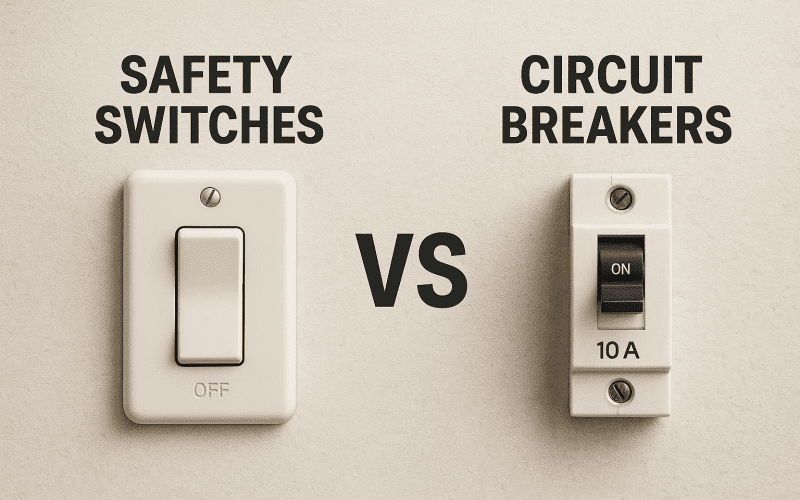
From running factory machinery to keeping the lights on at home, electricity is at the heart of how we live and work. But when faults happen, the consequences can be costly, and more importantly, dangerous. That’s where two critical devices come in: safety switches and circuit breakers. They’re often mistaken for one another, but each serves a very different purpose. Understanding the difference between switch and circuit breakers can help you see why both are critical for safety and compliance.
At J3T Electrical, we’ve spent more than a decade working with Melbourne businesses to design, install, and maintain electrical systems that are safe, efficient, and reliable. Here, we break down the basics of safety switch vs circuit breakers so you know why both are vital for a safe and reliable electrical system.
What is an Electrical Safety Switch?
A safety switch is designed to protect people. It monitors the flow of electricity through a circuit and instantly shuts off power if it detects current leakage, which is often caused by wiring faults or damaged appliances. Acting within milliseconds, it can prevent serious electric shocks.
Safety switches are easy to spot on your switchboard, usually marked with a “test” button. Pressing this button every few months confirms the switch is working properly. If it trips, it’s a warning that something may be unsafe and needs checking by a licensed residential or industrial electrician.
Common Problems With Electrical Safety Switches
Safety switches can experience issues in both homes and workplaces. Nuisance tripping is common and can be caused by faulty appliances, wiring problems, or electrical leaks. In areas exposed to the elements, moisture or water ingress can also lead to faults. Older switchboards may not have enough safety switches to meet current standards, leaving circuits unprotected.
What is a Circuit Breaker?
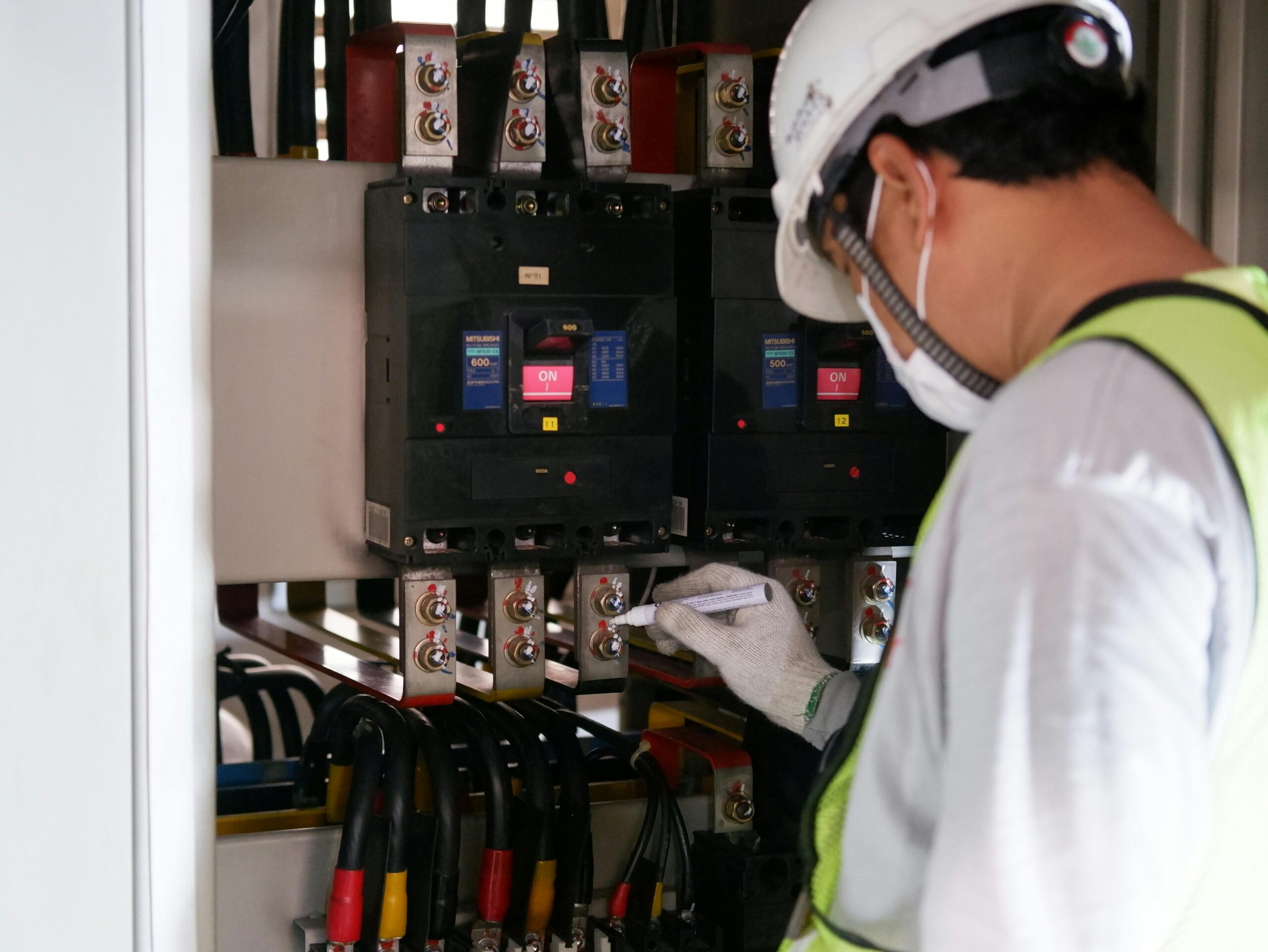
A circuit breaker, on the other hand, is designed to protect electrical systems and appliances. It trips when there’s an overload (too many devices drawing power at once) or a short circuit, which can cause overheating or even electrical fires.
Unlike a safety switch, a circuit breaker won’t prevent electric shocks. Instead, it simply stops too much current from flowing through the wires. If your lights or power points stop working because the breaker has tripped, it usually means the circuit is overloaded or there’s a fault that needs attention.
Common Problems With Circuit Breakers
Circuit breakers in both homes and workplaces can develop issues over time. Frequent tripping may occur due to overloaded circuits, short circuits from faulty wiring, or general wear and tear from regular use. Signs of a problem include breakers that feel hot, show visible damage, or won’t stay reset. In some cases, the breaker may not be the right size for the electrical load, especially when new appliances or machinery are added.
Bear in mind that repeated outages can also sometimes be linked to external supply issues, such as power grid faults or weather events. Read on to learn more about power outage causes and solutions.
Why Homes and Workplaces Need Both
As we’ve mentioned, circuit breakers protect wiring and appliances from damage caused by overloads or short circuits, but they won’t prevent electric shock. A safety switch is the only device designed to protect people from serious harm. Together, they are the backbone of a safe and compliant electrical system.
Australian Standards (AS/NZS 3000) also require safety switches in new homes and renovations, while workplaces must also meet strict electrical safety regulations. It’s the law, and it’s as simple as that.
How to Check if You’re Protected
It’s easy to see if you have both devices. Open your switchboard and look for switches labelled “Safety Switch” or with a “test” button. If you only see circuit breakers without test buttons, you may not have safety switches installed.
For complete protection, you should:
- Test safety switches every three months.
- Contact a licensed electrician if a switch trips frequently.
- Arrange an inspection with a reputable electrical maintenance service company if you’re unsure about your current setup.
Our experienced team provides both industrial and residential electrician services in Melbourne. We can inspect your setup, recommend any necessary upgrades, and ensure your system meets safety standards.
Who Can Install Circuit Breakers and Safety Switches on Your Property?
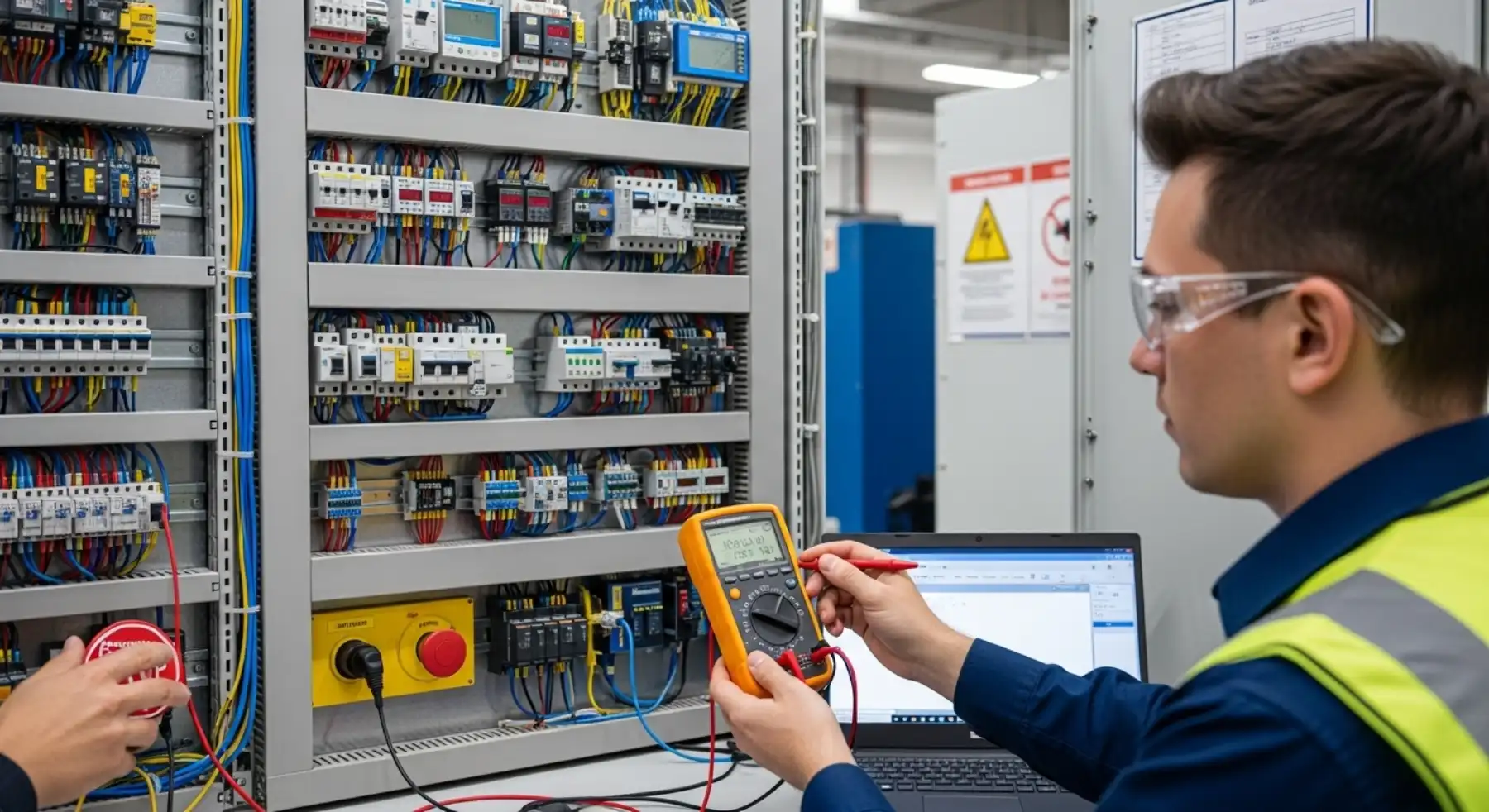
In Australia, only a licensed electrician can legally install circuit breakers and safety switches. Because these devices connect directly to your switchboard and involve live wiring, it’s dangerous (and illegal) to try to do it yourself. DIY installation can lead to serious injury, hefty fines, or even void your insurance.
A licensed electrician will ensure everything is installed correctly and meets Australian Standards. Whether you’re upgrading your switchboard, fitting out a new workspace, or renovating your home, working with a qualified industrial or home renovation electrician is the safest way to make sure your system can handle new appliances and power demands.
Book an Electrical Safety Inspection
While both devices cut power in the event of a fault, they do so for different reasons. Now that you know the difference between switch and circuit breaker, you can make informed decisions about ensuring your system is properly protected.
Contact J3T Electrical today to book an inspection and make sure your electrical system is as safe and reliable as it should be.